If your air conditioner keeps breaking down or struggles to cool your building, it may be time to consider AC replacement. Pittsburgh PA property owners often choose over repeated repairs. While fixing an older system can seem like the cheaper option, repair costs can add up quickly. A new installation often delivers better efficiency, lower operating costs, and more reliable performance. Understanding when replacement makes sense can help homeowners and business owners make a smart long-term decision.
How Long Should an Air Conditioning System Last?
Most Air conditioning lifespan systems of 10 to 20 years. The exact number depends on maintenance, usage, installation quality, and environmental conditions.
As equipment ages, components wear out and efficiency declines. Even well-maintained systems eventually reach a point where replacement becomes more practical than continued repairs.
What Factors Affect System Lifespan?
Several factors influence how long an AC unit will last. Regular maintenance plays a major role in protecting equipment and preventing premature failures.
Other important factors include:
- System size and design
- Installation quality
- Usage patterns
- Local climate conditions
- Indoor air quality
- Frequency of maintenance
A properly maintained system usually performs better and lasts longer.
When Do Repairs Stop Making Financial Sense?
Repairing an AC installation cost is often the right choice when the issue is minor. However, repeated service calls can become expensive over time.
When repair costs continue to rise, investing in a replacement may provide better value. A newer system often reduces both maintenance expenses and energy bills.
How Often Is Too Often for Repairs?
If you’re calling for repairs multiple times each year, your system may be nearing the end of its useful life.
Frequent breakdowns create inconvenience and uncertainty. Business owners especially need reliable cooling to maintain comfortable working conditions and avoid disruptions.
What Is the 50 Percent Rule?
Many HVAC professionals use a simple guideline. If a repair costs roughly 50 percent of the value of a new system, replacement is often the better investment.
This isn’t a strict rule, but it can help property owners evaluate long-term costs more effectively.
What Are the Signs You Need AC Replacement?
Air conditioners usually provide warning signs before they fail completely. Recognizing these signs early can help prevent emergency breakdowns.
A professional inspection can determine whether repairs are still practical or if replacement is the smarter option.
Common Signs of a Failing System
Several issues may indicate it’s time for replacement:
- Rising energy bills
- Uneven cooling
- Excessive humidity
- Frequent repairs
- Strange noises
- Poor airflow
- Aging equipment
When multiple problems occur at the same time, replacement often becomes the most cost-effective solution.
How Can a New System Improve Energy Efficiency?
Older air conditioners generally consume more electricity than modern equipment. Advances in HVAC technology have significantly improved efficiency over the last decade.
A new system can provide the same cooling performance while using less energy. Choosing professional AC installation also ensures the equipment is properly sized and installed for maximum efficiency, helping reduce energy waste and lower monthly operating costs.
Why Do Older Units Use More Energy?
As components wear out, systems must work harder to maintain desired temperatures. Dirt buildup, aging compressors, and outdated technology all contribute to reduced efficiency.
Newer units use advanced controls and improved designs to maximize performance while minimizing energy consumption.
When Is a Commercial Cooling Capacity Upgrade Necessary?
Business needs often change over time. Expanding staff, additional equipment, or building renovations can increase cooling demands.
In these situations, a commercial cooling capacity upgrade may be necessary to maintain comfortable indoor temperatures.
What Causes Cooling Demand to Increase?
Many factors can increase cooling requirements:
- Office expansion
- New technology equipment
- Increased occupancy
- Building additions
- Changes in building usage
An HVAC assessment helps determine whether your existing system can handle current demands.
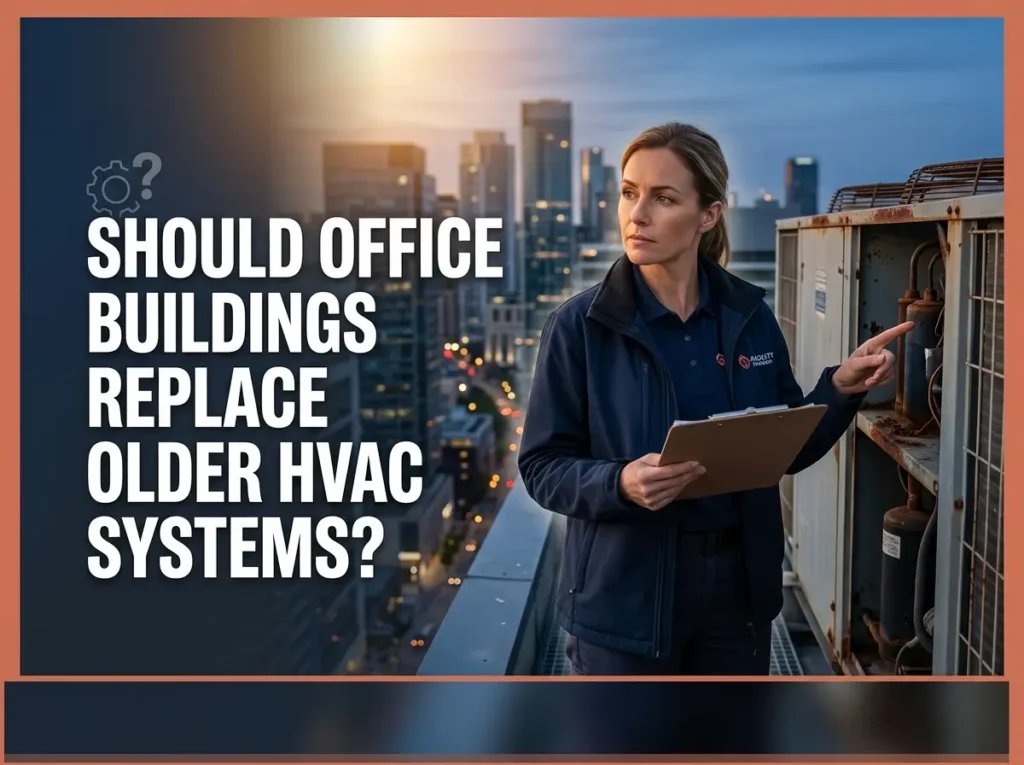
Should Office Buildings Replace Older HVAC Systems?
Older commercial systems often struggle to keep pace with modern workplace needs. Employees expect consistent temperatures and good indoor air quality.
An HVAC system replacement for office buildings can improve comfort while reducing operating expenses.
How Does Replacement Benefit Office Environments?
A modern HVAC system can provide:
- Better temperature control
- Improved airflow
- Enhanced energy efficiency
- Quieter operation
- Improved indoor air quality
These benefits contribute to a more productive and comfortable work environment.
What Are the Benefits of Rooftop AC Unit Installation?
Many commercial properties use rooftop systems because they save indoor space and simplify equipment access.
A rooftop AC unit installation can be an excellent solution for offices, retail stores, and other commercial buildings.
Why Are Rooftop Units Popular?
Rooftop systems offer several practical advantages. They keep equipment out of occupied areas and help reduce noise inside the building.
Maintenance technicians can also access equipment more easily without disrupting daily operations. This makes routine service and repairs more convenient.
When Should a Rooftop Unit Be Replaced?
Replacement may be necessary when a rooftop unit experiences recurring failures, declining efficiency, or inadequate cooling performance.
New rooftop systems often include advanced controls and energy-saving features that help lower operating costs.
What Are Custom HVAC Design-Build Services?
Not every building has the same cooling requirements. Some properties need specialized solutions tailored to unique layouts and operational needs.
This is where custom HVAC design-build services become valuable.
How Does the Design-Build Process Work?
The design-build approach combines planning, engineering, and installation into a single process.
Contractors evaluate the building, calculate cooling loads, and design a system that meets performance goals. This integrated approach often improves efficiency and reduces project delays.
Who Benefits Most From Custom HVAC Solutions?
Custom systems are especially useful for:
- Office complexes
- Medical facilities
- Industrial properties
- Retail centers
- Educational buildings
These properties often require more advanced cooling strategies than standard installations can provide.
How Does New HVAC Technology Improve Performance?
Modern HVAC systems offer features that were unavailable in older equipment. These advancements help improve comfort, efficiency, and system management.
Technology upgrades can make a significant difference in both residential and commercial settings.
Popular Features in New HVAC Systems
Many modern systems include:
- Smart thermostats
- Variable-speed compressors
- Zoned cooling controls
- Remote monitoring
- Advanced filtration systems
These features help optimize performance while reducing energy consumption.
What Should Property Owners Consider Before Replacement?
Replacing an HVAC system is a major investment. Careful planning helps ensure the project delivers long-term value.
Before making a decision, property owners should evaluate current system performance, operating costs, and future cooling needs.
Questions to Ask Before Installing a New System
Consider asking:
- How old is the current system?
- What are annual repair costs?
- Is cooling performance declining?
- Will future building needs change?
- What efficiency improvements are available?
The answers can help determine whether replacement is the right choice.
Why Work With Experienced Pittsburgh HVAC Professionals?
Local contractors understand the climate conditions and building types common throughout Pittsburgh. This knowledge helps ensure systems are properly designed and installed.
Experienced professionals can also identify opportunities to improve efficiency and comfort during the replacement process.
What Should You Look for in a Contractor?
When comparing HVAC companies, consider:
- Licensing and insurance
- Commercial project experience
- Customer reviews
- Warranty coverage
- Maintenance support
- Detailed project proposals
A qualified contractor should explain recommendations clearly and provide transparent pricing.
FAQ
How do I know if AC replacement Pittsburgh PA services are better than repairs?
If your system requires frequent repairs, struggles to cool the building, or causes rising energy bills, replacement may be the better option. Older units often become less reliable and more expensive to maintain. A professional inspection can compare repair costs against replacement benefits and help you make an informed decision.
What is a commercial cooling capacity upgrade?
A commercial cooling capacity upgrade involves increasing the cooling ability of an HVAC system to meet current building demands. This may be necessary after expansions, renovations, or occupancy increases. Proper sizing ensures comfortable indoor temperatures and efficient operation throughout the building.
When should a rooftop AC unit installation be considered?
Rooftop AC unit installation is often ideal for commercial buildings that need to maximize indoor space. These systems are commonly used for offices, retail stores, and warehouses. They provide easy service access and help reduce indoor noise while delivering reliable cooling performance.
How does HVAC system replacement for office buildings improve efficiency?
New office HVAC systems use advanced technology that reduces energy consumption while improving temperature control. Features such as variable-speed operation and smart controls help optimize performance. Replacement can lower operating costs, improve comfort, and create a more productive workplace environment.
What are custom HVAC design-build services?
Custom HVAC design-build services combine system planning, engineering, and installation into a single process. Contractors create solutions tailored to a building’s specific cooling requirements. This approach often results in better efficiency, improved comfort, and smoother project execution.
How long does a new commercial HVAC installation take?
Project timelines vary depending on building size, system complexity, and installation requirements. Smaller projects may take a few days, while larger commercial installations can take several weeks. Your contractor should provide a detailed timeline after evaluating the property and project scope.