
Most homeowners don’t think much about how their central air system gets installed. They only pay attention to whether it cools the house or not. But AC installation itself determines how long the system lasts and what you will pay to operate it every summer. An oversized cooling system short-cycles, leaving your home humid and uncomfortable even when temperatures drop. While an undersized system runs constantly and still cannot keep up on Pittsburgh’s hot days. It also burns through its mechanical components years ahead of schedule.
NEAR Heating & Cooling HVAC understands that there is more to getting air conditioning installation in Pittsburgh right than connecting a few lines. We perform a Manual J load calculation to determine exactly how much cooling capacity your home needs. The assessment is based on factors like square footage, insulation, window placement, and sun exposure. Pittsburgh summers bring high humidity alongside the heat, and a properly sized system handles both. It pulls moisture out of the air while maintaining comfortable temperatures throughout every room in the house.
A complete cooling system installation involves far more decisions than most people realize. At NEAR Heating & Cooling HVAC, we walk every customer through the full scope of the project before any work begins. We discuss equipment selection and expected efficiency performance under Pittsburgh’s specific climate conditions.
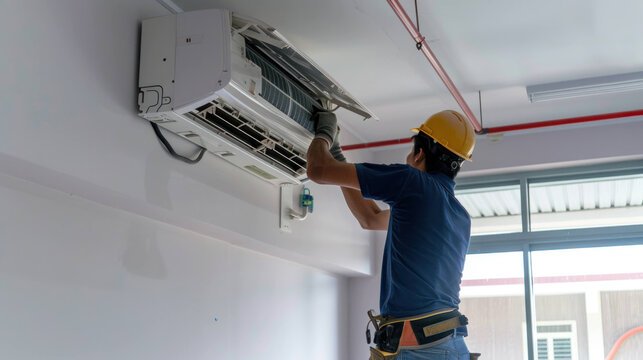
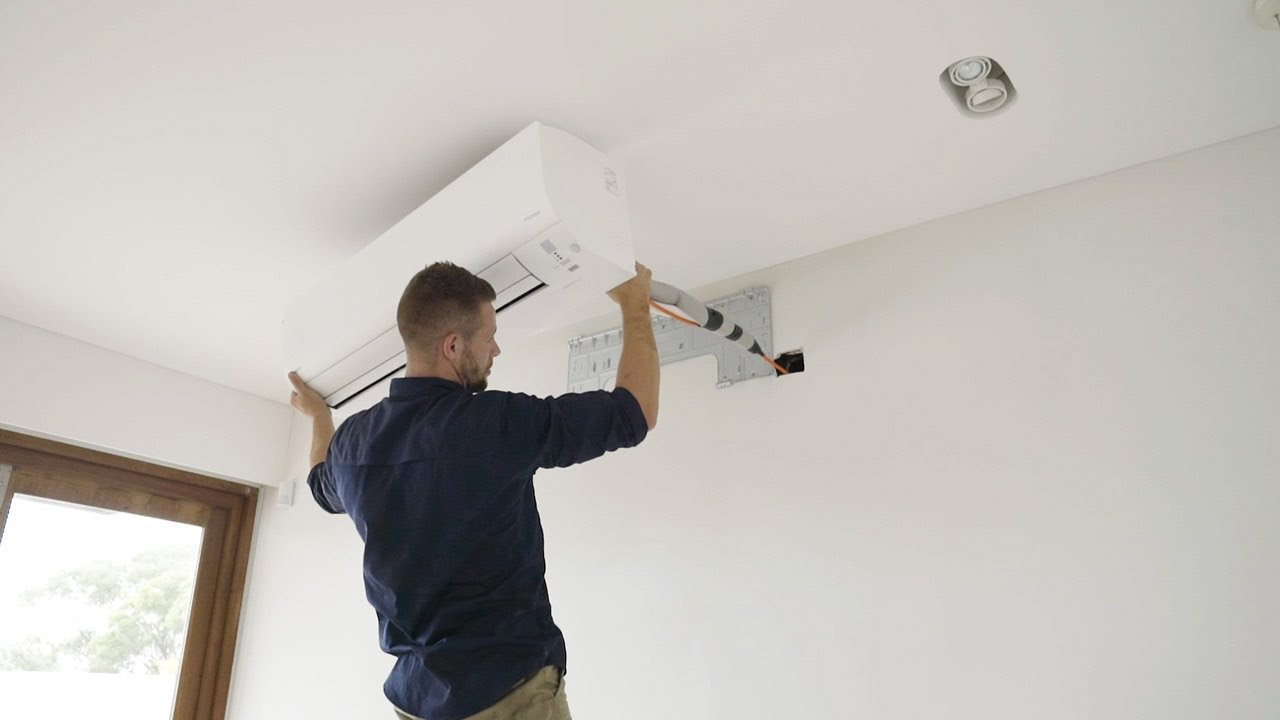
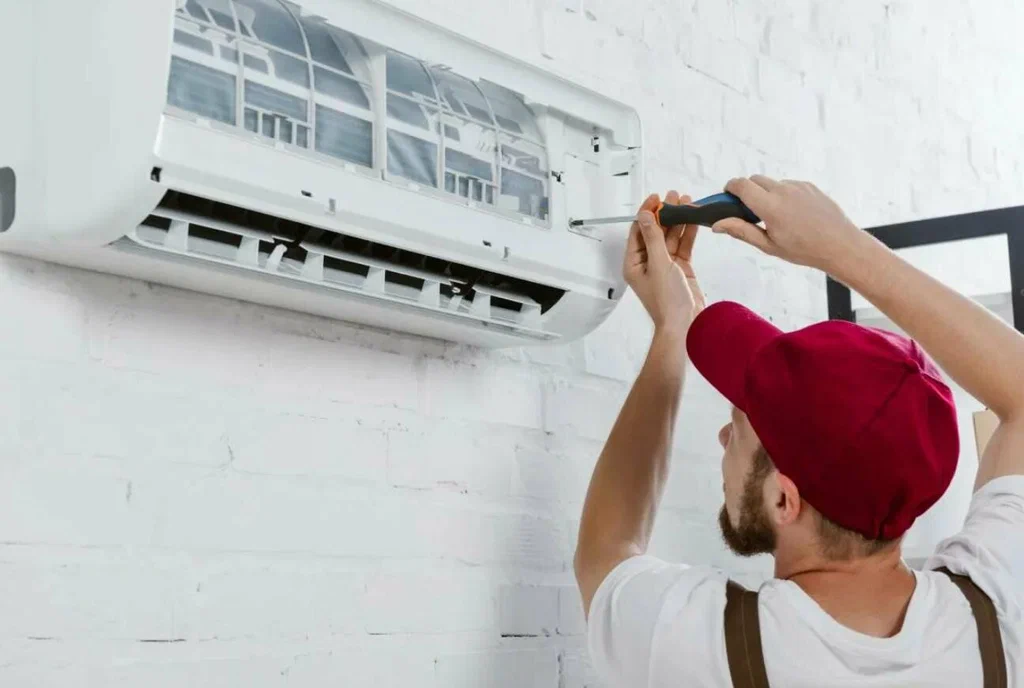
For whole-home cooling, a central split system outperforms window units on every metric — efficiency, noise, air distribution, and humidity control. Window units work as supplemental cooling for single rooms but cannot condition an entire home effectively.
Central AC installation in Pittsburgh ranges from $4,000 to $8,500 depending on system size, SEER2 rating, and ductwork condition. Ductless mini-split systems run higher per zone but eliminate duct-related efficiency losses that can account for 20 to 30% of total cooling output.
Window units don’t require a licensed HVAC contractor, meaning you can do it yourself. But if you are experiencing consistent problems relying on window units, that’s a sign you’d benefit from a professional technician’s assessment.
Licensed HVAC technicians handle air conditioner repair. In Pennsylvania, refrigerant handling specifically requires EPA 608 certification. Hiring an uncertified technician risks improper refrigerant charge and can also void equipment warranties.
Condenser units should never be installed in enclosed spaces, directly against walls without clearance. Also, avoid areas with heavy debris exposure, or where exhaust heat has nowhere to dissipate. Restricted airflow around the condenser reduces efficiency and accelerates compressor wear significantly.
The main types include central split system installation, packaged unit installation, and ductless mini-split installation. Each suits different home configurations and duct availability. The right choice depends on your home’s layout and long-term energy efficiency goals.