
A furnace failure in Pittsburgh becomes a serious problem when January temperatures regularly drop into the teens. When your heating system goes down, you’re dealing with unhealthy indoor temperatures, and the pressure of finding qualified help for furnace repair in Pittsburgh PA. Our licensed technicians make the difference between a furnace that fails at the worst possible moment and one that runs reliably through winter. It usually comes down to how well it has been diagnosed, maintained, and repaired when early warning signs first appear.
Most furnace problems begin as small inefficiencies. A heat exchanger running slightly hotter than it should or a blower motor drawing more current than its design rating. These are the kinds of issues that show up as rising utility bills and short-cycling issues. Catching them early through regular furnace maintenance in Pittsburgh is what separates a $200 furnace repair from a $2,000 one.
Our HVAC technicians diagnose and repair all major furnace types including gas, electric, and oil. We serve both residential and light commercial properties throughout Pittsburgh. We carry a full inventory of replacement components on our service vehicles to complete most repairs on the first visit. Our crew doesn’t rely on guesses and begins every furnace service in Pittsburgh with a complete system diagnostic.
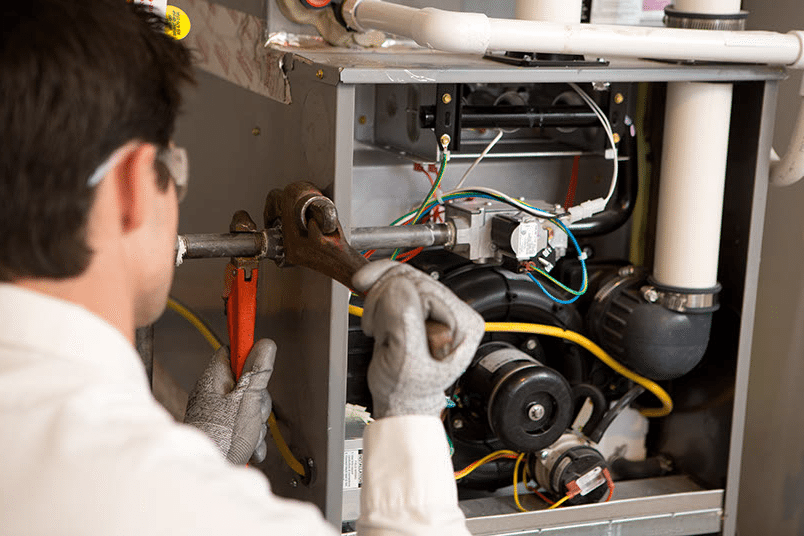
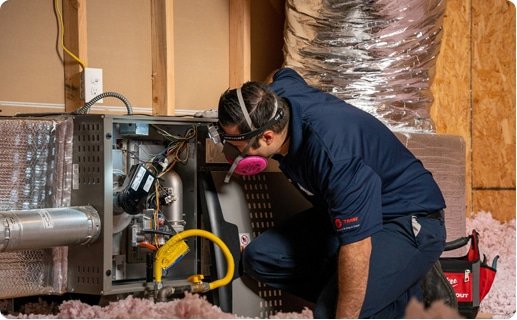
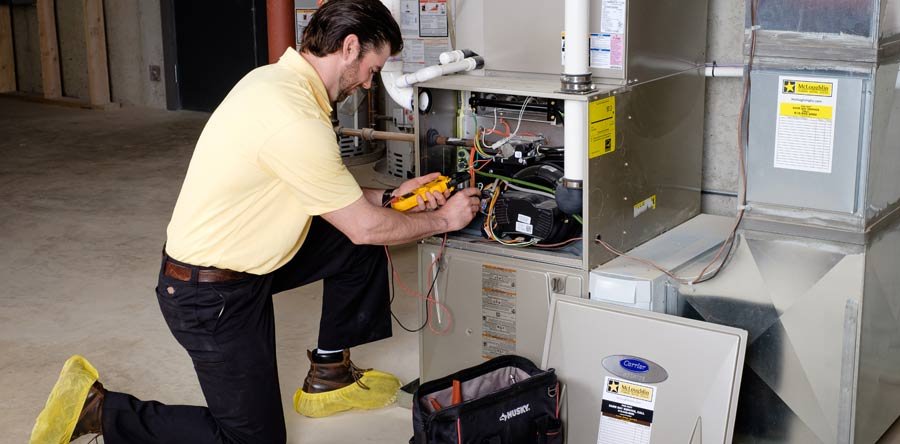
Gas furnaces are the dominant heating system in Pittsburgh’s residential housing stock. They operate without incident for 15 to 20 years when properly maintained. But gas combustion systems carry a risk that electric systems don’t. A cracked heat exchanger can allow carbon monoxide to enter your home’s airstream without triggering any obvious mechanical symptom. The furnace may produce heat and cycle normally while simultaneously introducing CO into your living space through the supply ducts.
This is why we pay special attention to heat exchanger inspection during any gas furnace repair in Pittsburgh PA. Our technicians use the right equipment and combustion analysis to identify a cracked heat exchanger. If we find that it is beyond its serviceable life, we’ll give you an honest recommendation on replacement, along with the data to support that recommendation.
Older rowhouses and craftsman bungalows in Pittsburgh often run furnaces that are 20 years or older. Many of those systems are still repairable with the right technician. NEAR Heating & Cooling HVAC has spent over a decade diagnosing and repairing heating systems across the city’s neighborhoods. We are a household name from the North Shore to Mount Lebanon to Squirrel Hill. We understand the ductwork configurations, boiler-to-furnace conversion histories, and common failure patterns specific to Pittsburgh’s housing.
Clogged air filters are the single most frequent cause of furnace performance issues. A blocked filter restricts airflow across the heat exchanger, causing the system to overheat. It trips the high-limit switch and shuts down before completing a full heating cycle.
Replacing a heat exchanger is the costliest furnace repair, often running between $800 and $3,000 in parts and labor. On older systems, this cost frequently exceeds the value of the furnace itself, making full furnace replacement Pittsburgh PA the more practical financial decision.
The most reliable early signs of a furnace approaching failure are short-cycling, yellow or orange burner flames instead of blue, and cold air from supply vents. You will also notice a sharp increase in gas bills without increased usage.
A failed hot surface igniter is the most frequent single-component cause of a furnace producing no heat. When it cracks or burns out, the gas valve won’t open, and the system cycles without ever establishing a flame.
The most likely causes are a tripped high-limit switch from restricted airflow or a gas valve not fully opening. Also, a flame sensor so coated in residue that it cuts the burner signal within seconds of ignition, before the heat exchanger reaches operating temperature.
Yes. Modern gas furnaces require electricity to operate the control board, ignition system, and blower motor. Even though the heat source is gas, there’s no power-independent operation. A generator or battery backup is the only way to maintain heating during a Pittsburgh power outage.